Last updated: February 2026
Have you ever been sitting on the couch, riding the bus, or standing in line at a grocery store when suddenly your palm starts tingling and itching for no apparent reason? If so, you are far from alone. Across cultures spanning thousands of years and multiple continents, people have believed that itchy palms are a powerful omen connected to money, fortune, and luck. In the English-speaking world, the superstition about itchy palms and money is one of the most widely recognized folk beliefs still alive today. In Spanish-speaking communities, the same belief is known as "comezon en la mano" and carries just as much weight. Whether you call it an itchy palm, a tingling hand, or a "comezon en la mano significa dinero" moment, the message is the same: pay attention, because money might be on its way.
But where did this belief come from? Is there any truth behind it? And have people actually won the lottery after feeling that unmistakable itch? In this comprehensive guide, we will trace the itchy palm superstition from its ancient origins all the way to modern-day lottery winners who swear by it. We will explore what it means when your right hand itches versus your left, how cultures around the world interpret the sign differently, and what you should do the next time your palm starts tingling. Whether you are a skeptic or a true believer, the stories and traditions behind itchy palms and lottery luck are too fascinating to ignore.
The Ancient Origins of the Itchy Palm Superstition
The belief that itchy palms foretell money and fortune is not a modern invention. Its roots stretch back well over a thousand years, deep into the traditions of some of Europe's earliest civilizations. Understanding where the superstition began helps explain why it has endured for so long and why it remains so deeply embedded in cultures around the globe.
The most widely cited origin of the itchy palm superstition traces back to the Saxons, the Germanic tribes who settled in Britain between the 5th and 7th centuries. The Saxons held a widespread belief in the healing and mystical properties of silver. They believed that rubbing afflicted skin against silver could cure diseases and ailments. Over time, this association between skin sensations and silver evolved into a broader folk belief: if your skin itched, particularly the skin on your palms, it was a sign that silver or money would soon come into contact with your hands.
When the Saxons settled in the British Isles, their customs and beliefs blended with those of the Celtic and Roman populations already living there. The Celts, who had their own rich tradition of superstition and nature-based spirituality, added a critical layer to the itchy palm belief. The Celts believed that touching or rubbing wood could bring good luck and ward off evil spirits. This is why, to this day, the traditional remedy for an itchy left palm is to rub it on a piece of wood. The Celtic reverence for trees and wood also gave rise to the well-known practice of "knocking on wood" to prevent bad luck, a custom that has survived virtually unchanged for over a millennium.
The Romans, too, contributed to the development of palm-related superstitions. Roman augurs and soothsayers placed great importance on physical sensations as omens from the gods. An unexpected twitch or itch was never dismissed as random. It was interpreted as a message, a sign that something significant was about to happen. When Roman belief systems merged with Saxon and Celtic traditions in post-Roman Britain, the itchy palm superstition gained the multi-layered cultural foundation that has helped it endure across centuries.
By the medieval period, the belief was firmly established across England, Ireland, Scotland, and Wales. It was passed down through oral tradition, embedded in folk sayings, and referenced in local almanacs and folklore publications. The superstition survived the Reformation, the Enlightenment, and the Industrial Revolution. It traveled with British and Irish emigrants to America, Australia, and beyond. Today, the itchy palm belief is recognized on virtually every continent, a testament to the power of the original Saxon, Celtic, and Roman traditions that gave it life.
What Does an Itchy Right Palm Mean?
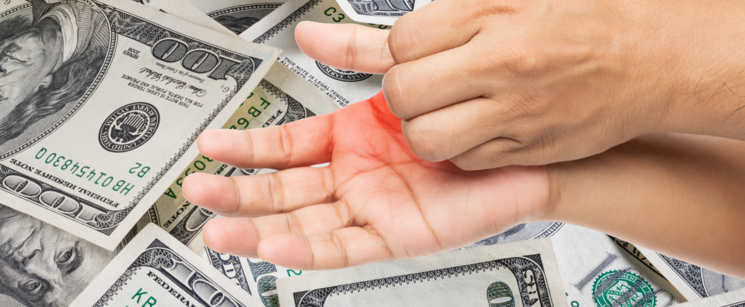
In almost every culture that recognizes the itchy palm superstition, the right hand holds a special and positive significance. The right hand has long been considered the "receiving hand," the hand that accepts gifts, shakes hands in greeting, and takes hold of opportunities. Because of this deep symbolic association, an itch on the right palm is almost universally interpreted as a sign that money, wealth, or good fortune is heading your way.
When your right palm itches, tradition says you should be on the lookout for financial blessings. These could take many forms: an unexpected raise at work, a surprise gift, finding money on the ground, receiving an inheritance, or winning the lottery. The key teaching across most cultures is that you should not scratch the itch too aggressively. Scratching it away is said to cancel the incoming good fortune. Instead, many traditions recommend gently rubbing the palm or simply letting the itch run its course, allowing the positive energy to remain undisturbed.
In Hindu tradition, the interpretation of itchy palms is particularly interesting because it incorporates gender-specific meanings. In Hinduism, Goddess Lakshmi is the deity of wealth, fortune, and prosperity. An itchy right palm is seen as a blessing from Lakshmi, a sign that her grace is flowing toward you. However, the gender of the person experiencing the itch matters in Hindu belief. For men, an itchy right palm is considered a positive sign that money is coming. For women, however, the meaning is reversed: it is an itchy left palm that signals incoming wealth, while an itchy right palm for women may indicate money going out. This gender-based distinction is unique to Hindu tradition and is still widely observed in India and among Hindu communities worldwide.
Regardless of which specific tradition you follow, the overwhelming consensus across cultures is clear: if your right palm starts itching, something financially positive may be on the horizon. Many people have taken this as their cue to buy a lottery ticket, and as we will explore later in this article, some of them have won life-changing jackpots.
What Does an Itchy Left Palm Mean?
If the right palm is the receiving hand, the left palm is its opposite: the giving hand. In most Western traditions, an itch on the left palm is interpreted as a warning that money may soon be leaving your possession. This could manifest as an unexpected bill, a costly car repair, a medical expense, a financial loss in a business deal, or simply a period of tighter finances.
The left side of the body has been associated with negativity and caution in many cultures throughout history. The Latin word for left is "sinister," which over time came to mean something threatening or ominous. This linguistic history reinforces the folk belief that sensations on the left side of the body, including an itchy left palm, should be treated with caution rather than excitement.
However, the tradition does not leave you without a remedy. The most widely known countermeasure for an itchy left palm is to rub it on a piece of wood. This practice draws directly from Celtic tradition, where wood was believed to possess protective spiritual properties. By rubbing the itchy left palm on wood, you are symbolically transferring the negative financial energy out of your body and into the wood, where it can be neutralized. Some variations of the tradition suggest rubbing the palm on the corner of a wooden table, a wooden door frame, or even a tree trunk.
It is worth noting that not every tradition interprets the itchy left palm negatively. As mentioned in the previous section, Hindu tradition considers an itchy left palm on a woman to be a positive sign of incoming wealth. And as we will see in the real lottery winner stories later in this article, Mary Shammas of Brooklyn won $64 million after her left palm itched, proving that sometimes the "losing hand" delivers the biggest win of all.
Itchy Palm Beliefs Around the World
One of the most remarkable aspects of the itchy palm superstition is how it appears independently in cultures around the globe. While the Saxon-Celtic origin is the most well-documented, similar beliefs have emerged in societies that had little or no contact with one another. This cross-cultural consistency has led many people to wonder whether there is something deeper behind the superstition than mere folklore.
Ireland and the Victorian Era
In Ireland during the Victorian era, itchy palms were taken very seriously. An itchy right palm was believed to indicate that a windfall was imminent, perhaps through a business deal, an inheritance, or a stroke of pure luck. However, the Irish added a moral dimension to the belief: people with persistently itchy palms were sometimes thought to be greedy or excessively ambitious. The Irish also believed that scratching the itch too hard would cause the money to vanish before it arrived. If both palms itched simultaneously, the Irish tradition held that luck would follow you everywhere, but only if you kept your hands in your pockets to contain the energy.
Welsh Folklore
Welsh folklore contributed its own unique spin on the itchy palm superstition. A Welsh folklore magazine from the 1930s advised readers that rubbing an itchy left palm on an egg could help a woman conceive a child. While this particular variation has little to do with money, it demonstrates how deeply embedded palm-related superstitions were in everyday Welsh life. The Welsh also believed that rubbing an itchy palm on metal could stop gossip about you from spreading, a fascinating extension of the belief that physical sensations carry spiritual significance.
Buddhism and Energy Flow
In Buddhist philosophy, the itchy palm superstition is connected to concepts of energy flow within the body. An itchy right palm is believed to indicate that positive energy is being released from your body out into the world, creating space for new blessings to enter. An itchy left palm, conversely, suggests that your body is absorbing negative energy from your surroundings. Buddhist practitioners are advised to be mindful of these sensations and to use meditation or cleansing rituals to restore energetic balance. This interpretation frames the itchy palm not as a simple good-or-bad omen, but as a signal to pay attention to the energy dynamics in your life.
Biblical References
While the Bible does not specifically mention itchy palms, several passages reference the spiritual significance of hands. Isaiah 41:13 states, "For I am the Lord your God who takes hold of your right hand and says to you, Do not fear; I will help you." This verse reinforces the association between the right hand and divine blessing. Matthew 6:3 instructs, "But when you give to the needy, do not let your left hand know what your right hand is doing," drawing a clear distinction between the right hand (associated with giving and blessing) and the left hand (associated with secrecy or lesser actions). These Biblical passages, while not directly about itchy palms, have contributed to the broader cultural framework in which right-hand sensations are considered positive and left-hand sensations are viewed with caution.
Korean Beliefs
In Korean culture, itchy palms are also associated with financial changes. Koreans have traditionally believed that an itchy palm signals a shift in your financial situation. Similar to Western traditions, the right palm is associated with receiving money and the left palm with losing it. Korean elders have long advised younger generations to pay attention to these physical sensations and to act accordingly, whether that means being more careful with spending or being open to new financial opportunities. The persistence of this belief in modern South Korea, one of the world's most technologically advanced societies, speaks to the deep cultural roots of the itchy palm superstition.
Real Lottery Winners Who Had Itchy Palms
Superstitions are one thing. Real stories are another. What makes the itchy palm belief so compelling is that there are multiple documented cases of lottery winners who experienced itchy palms before purchasing their winning tickets. These are not urban legends or anonymous internet posts. These are real people whose stories have been covered by news outlets and lottery organizations. Here are some of the most remarkable cases.
Mary Shammas - $64 Million Mega Millions (Brooklyn, NY)
Perhaps the most famous itchy palm lottery story belongs to Mary Shammas of Brooklyn, New York. In 2010, Shammas was riding a city bus when her left palm began to itch intensely. Remembering the old superstition her grandmother had taught her, she decided to get off the bus early and stop at a nearby store to buy a Mega Millions ticket. That ticket turned out to be worth $64 million. Shammas's story was widely covered in the media and has become the go-to example whenever the connection between itchy palms and lottery luck is discussed. What makes her story especially interesting is that it was her left palm that itched, the hand traditionally associated with money going out, not coming in. Yet she won one of the largest jackpots in New York history.
Baltimore Woman Known as "Lucy" - $50,000 Scratch-Off
A Baltimore woman who identified herself only as "Lucy" to protect her privacy won $50,000 on a scratch-off lottery ticket after a chain of itchy palm events in her family. According to her account reported by the Maryland Lottery, her daughters had been complaining about their hands itching throughout the day. Lucy, who was familiar with the superstition, took it as a sign and purchased a scratch-off ticket on her way home. The ticket turned out to be a $50,000 winner. Lucy credited her daughters' itchy palms with prompting her to buy the ticket she would otherwise have skipped.
Denise McKenzie - $100,000 (North Carolina)
Denise McKenzie of North Carolina experienced an itchy palm that she simply could not ignore. Acting on the superstition she had grown up hearing about, McKenzie purchased a lottery ticket and won $100,000. Her story was reported by the North Carolina Education Lottery and added to the growing list of documented cases where itchy palms preceded a significant lottery win. McKenzie told reporters that she had always half-believed in the superstition but never expected it to actually come true for her.
Marion Richardson - $17 Million EuroMillions (UK)
Across the Atlantic, Marion Richardson of the United Kingdom experienced a persistent itchy palm that led her to purchase a EuroMillions ticket. That ticket won her a staggering $17 million. Richardson's story became one of the most well-known itchy palm lottery tales in Europe, and it helped introduce the superstition to audiences who may not have been familiar with it. Her win demonstrated that the belief is not limited to American lottery players and that the tradition crosses both cultural and geographic boundaries.
Maryland Keno Player - $40,000 (2025)
In a more recent case from 2025, a Maryland Keno player reported experiencing itchy hands before deciding to play. The player won $40,000, and when asked about what prompted the purchase, specifically cited the itchy palm superstition as the motivating factor. This case demonstrates that even in the modern era, with all of our scientific knowledge and technological advancement, the ancient belief about itchy palms and money continues to influence real purchasing decisions and, occasionally, real winning outcomes.
Mandurah, Australia Couple - $928,000
In Mandurah, a coastal city south of Perth, Australia, a couple experienced itchy palms and decided to take the superstition seriously. They purchased a lottery ticket and won approximately $928,000. The couple's story was reported by Australian media outlets and added an international dimension to the growing collection of itchy palm lottery winner stories. Their experience helped solidify the superstition's reputation in the Southern Hemisphere, where the belief had been less widely discussed than in Europe and North America.
La Comezon en la Mano y la Loteria
The itchy palm superstition is deeply rooted in Hispanic and Latino culture, where it is known as "comezon en la mano" or "comezon en las manos." The belief that "comezon en la mano significa dinero" (an itchy palm means money) is passed down through families and is taken very seriously by millions of Spanish-speaking people around the world. In many Hispanic households, grandparents and parents teach children from a young age that if their palm starts itching, they should pay attention because money may be on the way.
The tradition in Hispanic culture closely mirrors the Western interpretation: an itchy right palm means money is coming, while an itchy left palm may mean money is going out. However, the cultural emphasis in many Hispanic communities tends to focus more on the positive interpretation. When someone experiences "comezon en la mano," the immediate reaction is often excitement and anticipation rather than caution.
One of the most compelling Hispanic itchy palm lottery stories was featured on Telemundo, the major Spanish-language television network. The story covered a woman who won $1 million in the lottery after experiencing a persistent "comezon" in her hands. She told reporters that she had felt the itching throughout the day and, remembering what her grandmother had always told her, decided to stop at a convenience store and buy a lottery ticket on her way home from work. The ticket turned out to be a million-dollar winner. The Telemundo story went viral within Spanish-speaking communities and reinforced the widespread belief in "comezon en la mano" as a genuine sign of incoming fortune.
The Hispanic version of the superstition has its own regional variations. In Mexico, some people believe that the itch must be scratched with a coin to activate the luck. In parts of Central America, the tradition holds that you should close your fist tightly when the itch begins to "trap" the money before it escapes. In the Caribbean, some variations suggest that the time of day when the itch occurs affects its meaning, with morning itches being more auspicious than evening ones. These regional differences add richness and depth to the broader "comezon en la mano" tradition and demonstrate how the superstition has evolved and adapted within different Hispanic communities.
Could There Be a Scientific Explanation?
For all the cultural weight and real-world lottery winner stories behind the itchy palm superstition, it is worth asking: is there a medical or scientific explanation for why palms itch? The answer is yes, there are several well-documented medical causes for itchy palms, though none of them explain the apparent connection to financial windfalls.
Eczema, also known as atopic dermatitis, is one of the most common causes of itchy skin, including on the palms. This chronic condition causes the skin to become inflamed, red, and intensely itchy. Psoriasis, another common skin condition, can also affect the palms and cause persistent itching. Dry skin, particularly during winter months or in arid climates, frequently causes itching on the hands and palms. Contact dermatitis, an allergic reaction triggered by touching certain substances like detergents, metals, or chemicals, can also cause palm itching.
More serious medical conditions can also cause itchy palms. Diabetes can lead to poor circulation and nerve damage in the extremities, which may manifest as itching or tingling in the hands. Liver disease, kidney disease, and thyroid disorders have all been associated with generalized itching that can include the palms. Allergic reactions to food, medication, or environmental factors can also trigger itching throughout the body, including the palms.
From a neurological perspective, itching is caused by the activation of specific nerve fibers in the skin called C-fibers. These fibers send itch signals to the brain, which then creates the sensation and the urge to scratch. The palms are densely packed with nerve endings, which may explain why they are particularly susceptible to itch sensations.
However, none of these scientific explanations account for the timing coincidences reported by lottery winners. Science can explain why palms itch, but it cannot explain why Mary Shammas's palm itched on the very bus ride that led her to a $64 million jackpot, or why Marion Richardson's hands tingled right before she bought a $17 million EuroMillions ticket. The superstition persists not because science supports it, but because the real-world stories are too compelling to dismiss entirely. And for many people, that is enough reason to take an itchy palm seriously.
What to Do When Your Palm Itches
So your palm is itching right now, or it itched recently, and you are wondering what to do about it. Here is a practical guide that blends centuries of traditional wisdom with modern lottery strategy.
- Do not scratch too hard. Across nearly every culture that recognizes the itchy palm superstition, aggressive scratching is warned against. The belief is that scratching too hard will "scratch away" the incoming good fortune. If you must scratch, do so gently.
- If your left palm itches, rub it on wood. This is the classic Celtic remedy for counteracting the negative financial energy associated with a left-palm itch. Find a wooden table, door frame, or any natural wood surface and rub your left palm against it. According to tradition, this transfers the negative energy out of your body.
- Buy a lottery ticket. This is the most obvious action step, and it is exactly what many of the real lottery winners in this article did. If your palm is itching and you believe in the sign, act on it. You cannot win if you do not play.
- Use LottoLytics to analyze hot and cold numbers. If you are going to buy a ticket, do not just pick random numbers. Use LottoLytics to look at which numbers have been drawn most frequently (hot numbers) and which have been drawn least (cold numbers). Combining superstition with data-driven strategy gives you the best of both worlds.
- Trust the sign, but play responsibly. The itchy palm superstition has survived for over 1,500 years because something about it resonates with human experience. Trust the sign enough to take action, but always play within your budget and never spend more than you can afford to lose.

Frequently Asked Questions
Does an itchy right palm mean money is coming?
According to centuries of cultural tradition across Saxon, Celtic, Hindu, and Buddhist beliefs, an itchy right palm is widely considered a sign that money or good fortune is heading your way. The right hand is known as the "receiving hand" in most traditions, making it the hand associated with incoming wealth. While there is no scientific proof linking itchy palms to financial windfalls, many lottery winners have reported experiencing itchy palms before their big wins, including several documented cases covered by major news outlets.
What does it mean when your left hand itches?
In most Western traditions, an itchy left palm is considered a warning that money may be leaving you. This could mean unexpected bills, financial setbacks, or losses. The traditional remedy is to rub the itchy left palm on a piece of wood to neutralize the negative energy, a practice that originates from Celtic beliefs about the protective properties of trees. However, it is important to note that in Hindu tradition, the meaning is reversed for women: an itchy left palm for a woman is actually considered a positive sign of incoming wealth from Goddess Lakshmi. And Mary Shammas won $64 million after her left palm itched, so the "rules" are not absolute.
Has anyone won the lottery after having itchy palms?
Yes, multiple documented cases exist of lottery winners who credited itchy palms with their decision to buy a winning ticket. Mary Shammas of Brooklyn won $64 million in Mega Millions after her left palm itched on a bus ride. Marion Richardson won $17 million in EuroMillions after experiencing itchy hands. A Baltimore woman known as Lucy won $50,000 on a scratch-off after her daughters' hands itched. Denise McKenzie of North Carolina won $100,000 after an itchy palm. A Maryland Keno player won $40,000 in 2025 after itchy hands. And a couple from Mandurah, Australia won $928,000 after experiencing the same sensation. These are real, documented stories reported by lottery organizations and news outlets.
What should I do if my palm starts itching?
If your right palm itches, tradition says money may be coming your way, so consider buying a lottery ticket. If your left palm itches, rub it on a piece of wood to prevent money from leaving. Regardless of which palm itches, avoid scratching too hard, as folklore warns this could cancel out the good fortune. For the best results, combine the superstition with smart number selection. Use LottoLytics to analyze hot and cold number trends so that your ticket is backed by both tradition and data.
Is the itchy palm superstition real?
The itchy palm superstition has survived for over 1,500 years across dozens of cultures worldwide, from Saxon England to Hindu India to Korean tradition to Hispanic communities throughout the Americas. While medical science attributes palm itching to conditions like eczema, psoriasis, dry skin, diabetes, and allergies, the sheer number of documented lottery winner stories involving itchy palms keeps the belief alive and well. Whether the superstition is "real" in a scientific sense is debatable, but its cultural power and the real-world results experienced by some lottery winners are undeniable.